Why Vietnamese Bone Inlay Furniture Is Cheaper And What You're Actually Giving Up
With bone inlay pieces now appearing across social media and budget furniture sites, Australian shoppers are asking the right question: why is some bone inlay so cheap? Here's an honest answer and what it means for your home.
What is bone inlay furniture?
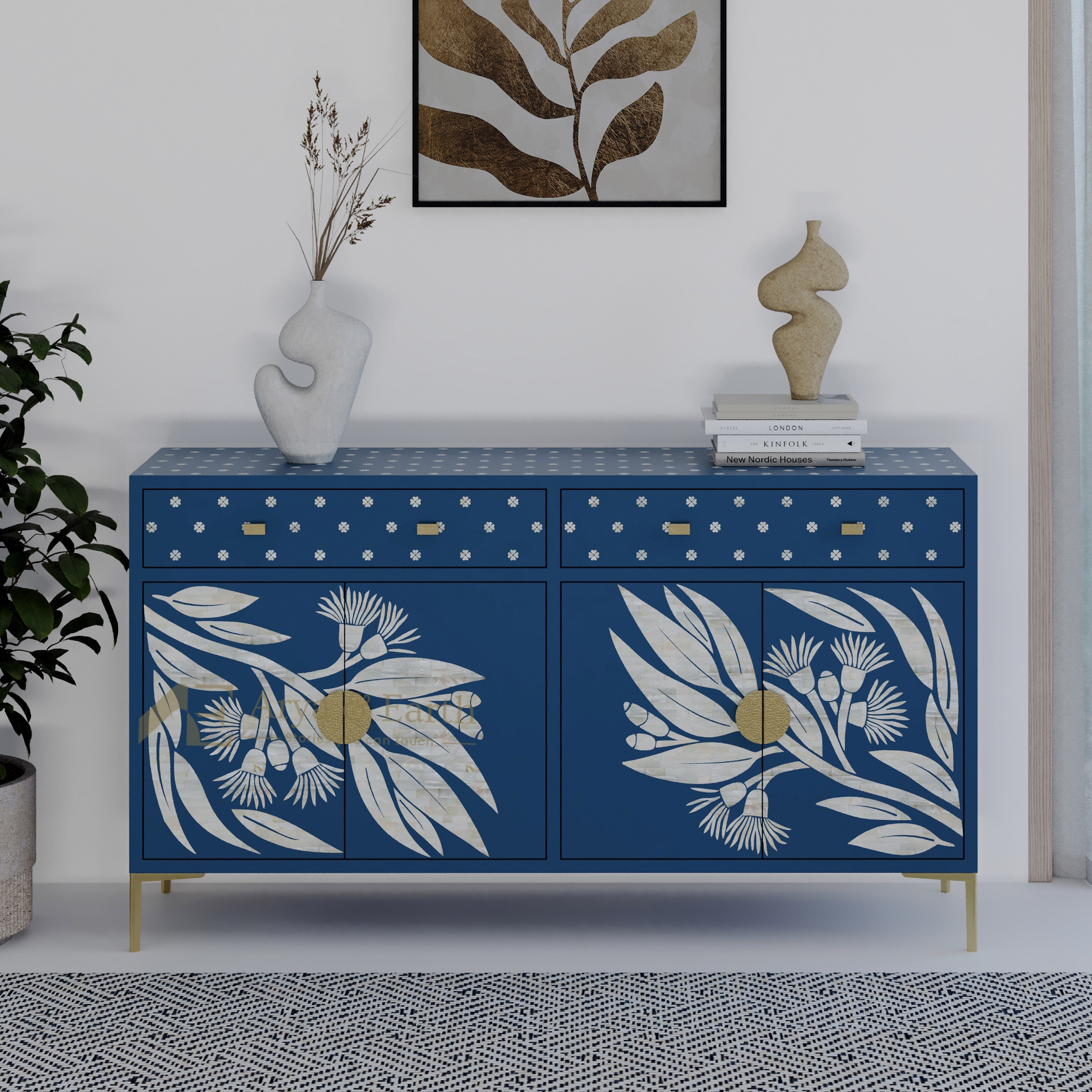
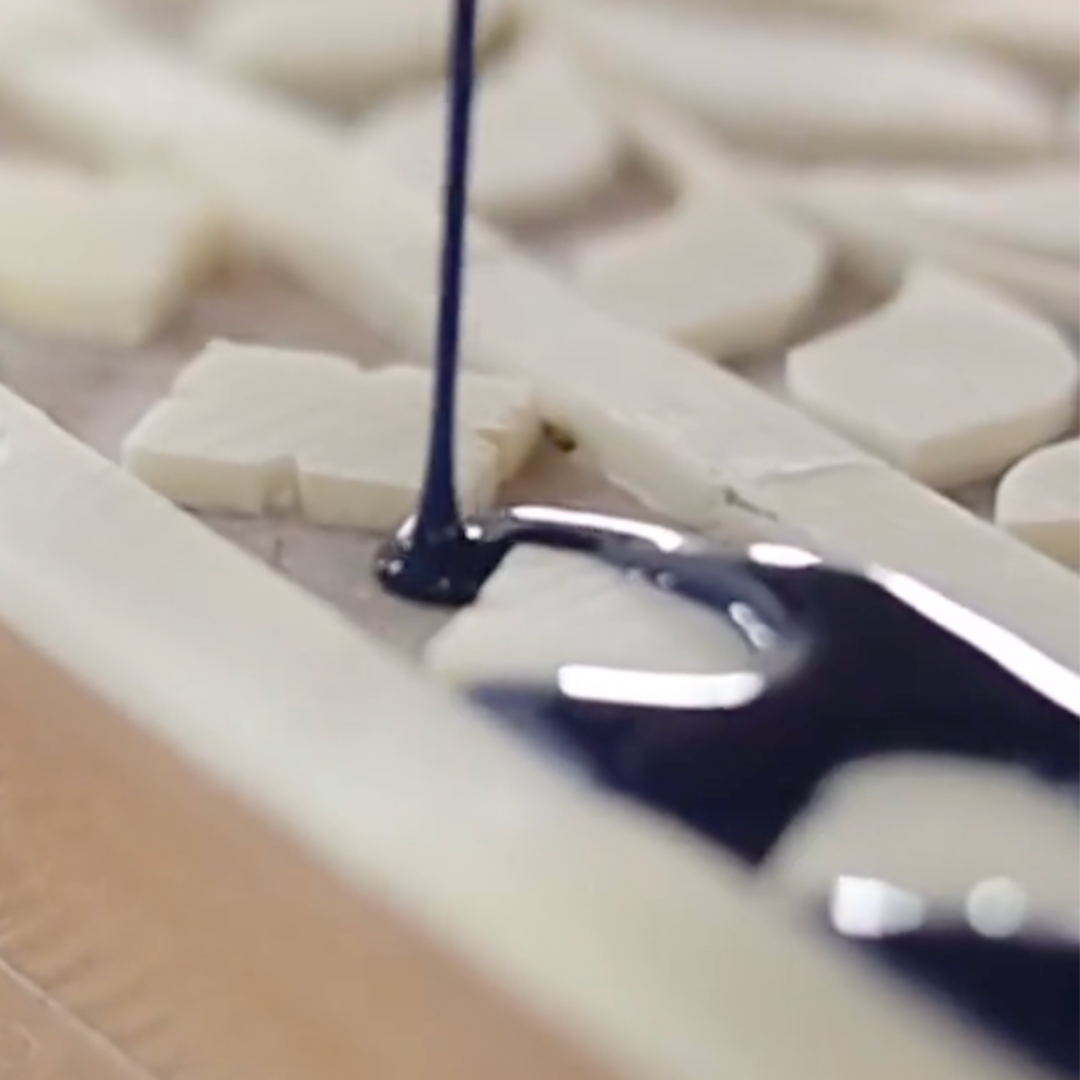
Bone inlay is a decorative craft in which thousands of individually cut pieces of buffalo or camel bone, or mother-of-pearl shell, are hand-set into a resin base, then polished to a smooth, flush surface. The result is a mosaic-like pattern across a piece of furniture — a chest, mirror frame, side table, or cabinet.
The technique is ancient, with roots in South Asian and Middle Eastern decorative arts. True handcrafted bone inlay takes days, sometimes weeks, to complete a single piece. That context matters when you see a "bone inlay" side table listed for $180.
Where Vietnamese bone inlay is made and why it's cheaper
Vietnam has become a significant source of lower-priced inlay furniture over the last decade, primarily for export to Western markets including Australia. The price difference is real, and it comes down to three structural factors.
Factory production, not artisan workshops: Vietnamese inlay at the lower price point is largely produced in factory settings with production-line assembly. Pieces are pre-templated, workers specialise in a single step such as cutting, filling, or sanding, and output volumes are high. This is efficient manufacturing, but it isn't hand-craft in the traditional sense.
Synthetic resin as a substitute material: a meaningful share of budget Vietnamese inlay uses resin or acrylic pieces cast to look like bone, rather than actual camel or buffalo bone. In a product photo the difference is nearly invisible. In person, real bone has organic variation — subtle striations, slight translucency, natural warmth that synthetic resin can't replicate.
Factory wages vs. artisan wages, and what that means for price chains: Vietnam's furniture output is factory manufacturing — repetitive, assembly-line production where labour is costed accordingly. There's no craft layer, the skill ceiling is low, and wages reflect that. India's Rajasthani workshops, by contrast, employ genuine artisans — carvers, inlay workers, painters — whose skills take years to develop and whose wages are priced into every piece. That craft premium is real, and it shows up in the cost.
Worth knowing: "bone inlay" has no regulated definition in Australian retail. A product can be marketed as bone inlay while using resin-cast pieces, particle-board substrate, and mass-produced patterns. There is no labelling requirement that distinguishes handcrafted from manufactured.
Side-by-side: what you're comparing
Typical Vietnamese or budget inlay is made through factory line assembly: pre-cut templated pieces pressed into pre-routed channels, sanded and lacquered in bulk. Pattern variety is limited to high-volume designs, and the substrate is often MDF or particle board.
Rajasthani handcrafted inlay, by contrast, is made by a single artisan, often part of a generational family workshop, who cuts each piece by hand, sets it individually into a lime putty base on solid mango wood, and hand-polishes it to finish. One chest may involve 6,000 to 10,000 individual pieces and two to three weeks of work.
The Rajasthan difference: 400 years of craft
The bone inlay tradition in Rajasthan, centred in cities like Jodhpur and Jaipur and the craft clusters of the Thar region, isn't a recent export industry. It's a 400-year-old living craft tradition passed through families, with design knowledge, tool techniques, and pattern vocabularies handed from father to son across generations.
What that means in practice: the patterns are original, with experienced artisans carrying hundreds of pattern systems in memory and able to develop entirely new geometric or floral vocabularies to order. The materials are genuine — camel or buffalo bone sourced as a by-product of the food industry, ethically sourced mother-of-pearl shell, and natural mineral pigments, with no synthetics. The substrate is solid wood — mango wood, which is dense, stable, and sustainably harvested, forms the frame, and it moves and ages like real furniture. Each piece is unique, because artisan hands cut and set every piece individually, so no two pieces are identical — this isn't a flaw, it's evidence of a human hand.
How to spot the difference before you buy
You won't always be able to tell from a product photo. Here's what to ask or look for.
Ask about the substrate. Solid mango wood or solid timber will be stated explicitly. If the listing says "wood" without specifying, ask, MDF or particle board is a strong indicator of factory production.
Ask about the inlay material. Real bone inlay should specify camel bone or buffalo bone. "Resin inlay" or no material specification is a sign of synthetic substitution.
Look at the pattern edges. In genuine handcrafted inlay, pattern edges have a slightly organic quality, precise but not mechanically uniform. Factory-pressed inlay tends to have perfectly straight edges, because the pieces were machine-cut.
Check the weight. Solid wood furniture is heavy. If a chest ships cheaply or feels light in reviews, MDF is likely.
Ask where it was made. Not just the country, ask which region, and whether it came from a workshop or a factory. A brand that works directly with artisan families will know the answer.
Worth knowing: at Arya & Earth, every piece comes from generational artisan families in Rajasthan. We can tell you the workshop, the pattern family, and the artisan tradition behind each design.
Frequently asked questions
Is Vietnamese bone inlay furniture bad quality? Not necessarily. Some Vietnamese workshops produce genuinely good work. The issue is that the lower price point on Australian retail sites almost always indicates factory production with synthetic materials, not artisan craft. If you're comparing on price alone, you're likely comparing different products entirely.
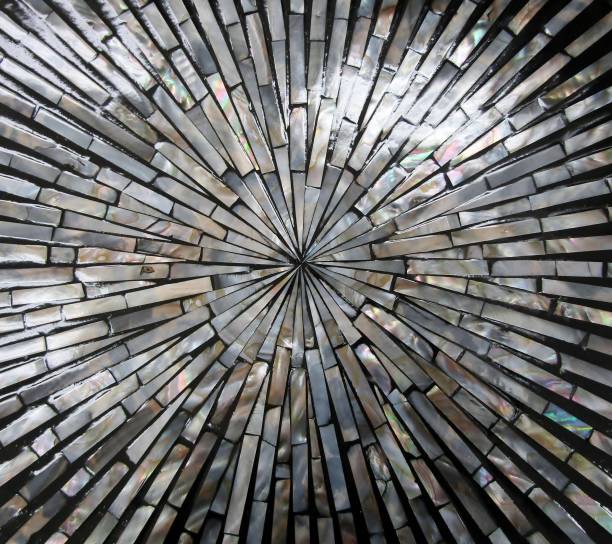
What is the difference between bone inlay and mother-of-pearl inlay? Bone inlay uses pieces cut from camel or buffalo bone, giving a warm, slightly translucent off-white appearance. Mother-of-pearl inlay uses shell, typically trochus or abalone, which produces an iridescent, reflective surface. Both are genuine craft techniques, and Arya & Earth pieces often combine both materials within a single design.
How long does handcrafted bone inlay furniture last? With proper care, genuine handcrafted bone inlay on a solid wood substrate should last generations. The lime putty and resin base bonds firmly, and solid mango wood is stable in Australian conditions. Budget pieces on MDF substrate are more susceptible to moisture movement, which can cause inlay to lift over time.
Is bone inlay furniture suitable for the Australian climate? Yes, solid wood bone inlay handles Australian conditions well when kept out of direct sun and away from high humidity. Most pieces benefit from occasional conditioning with a dry cloth and should be kept from prolonged water contact on the surface. MDF-based inlay is significantly more sensitive to humidity fluctuations.
Why is Rajasthani bone inlay more expensive than Vietnamese pieces? Because you're paying for weeks of skilled human labour, genuine materials, solid wood construction, and a pattern created by someone who has been practising this craft their entire life. The price reflects the cost of something actually made by hand, not manufactured to look like it was.
Where can I buy genuine Rajasthani bone inlay furniture in Australia? Arya & Earth is a Melbourne-based brand specialising in authentic handcrafted bone and mother-of-pearl inlay furniture, sourced directly from generational artisan families in Rajasthan and designed specifically for Australian homes.